
Measurement-based care
Use Pippa's standardized measures for measurement-based care: assign self-serve check-ins, record in-session scores, and track symptoms across weeks.
Measurement-based care means using validated symptom scores, tracked over time, to guide treatment rather than relying on impression alone. Pippa's Measures tab is built for exactly this loop: get a score in, watch the trend, and let a score in an action band pull the patient to your attention.
A negative screen or improving total does not rule out deterioration. Do not use scores or concern bands to predict suicide, decide access to treatment, or clear someone for discharge. These limits follow NICE NG225. Assess the patient's current needs and safety directly.
The instruments
Pippa supports five instruments. Higher scores mean more severe on every one.
- PHQ-9, depression, 0 to 27.
- GAD-7, anxiety, 0 to 21.
- SCOFF, eating-disorder screen, 0 to 5.
- EDE-Q, eating pathology, global 0 to 6, with four subscales.
- C-SSRS, suicide-risk screen, entered as the highest item endorsed.
The band cutoffs and the exact scoring rules live on the Measures tab reference. This page is about how to run the loop.
Assigning a self-serve check-in
The lightest way to keep a measure current is to send it to the patient's app on a repeat.
Go to the patient's Measures tab and find the Send a check-in control.
Choose PHQ-9, GAD-7, SCOFF, or EDE-Q. C-SSRS is not self-serve; a suicide screen is clinician-recorded only.
Choose Once, Weekly, Every 2 weeks, or Monthly. Weekly or biweekly suits an active phase; monthly suits maintenance.
The patient completes it in the app and the score lands back here automatically, carrying a patient badge so self-submitted and in-session scores stay distinguishable.
A patient in acute treatment benefits from a weekly PHQ-9 or EDE-Q; a stable patient does not need one every week. Reassign the cadence as the picture changes.
Recording an in-session score
When you administer a scale yourself, enter it with the composer at the top of the tab: pick the instrument, type the total (or for C-SSRS the highest endorsed item), set the date administered, and press Add score. Scores entered this way are clinician-recorded and have no patient badge.
Tracking over time
Each instrument gets its own card showing the latest score, its band, the change since last time, and the full history on a trend chart. Read the trend, not the single number.
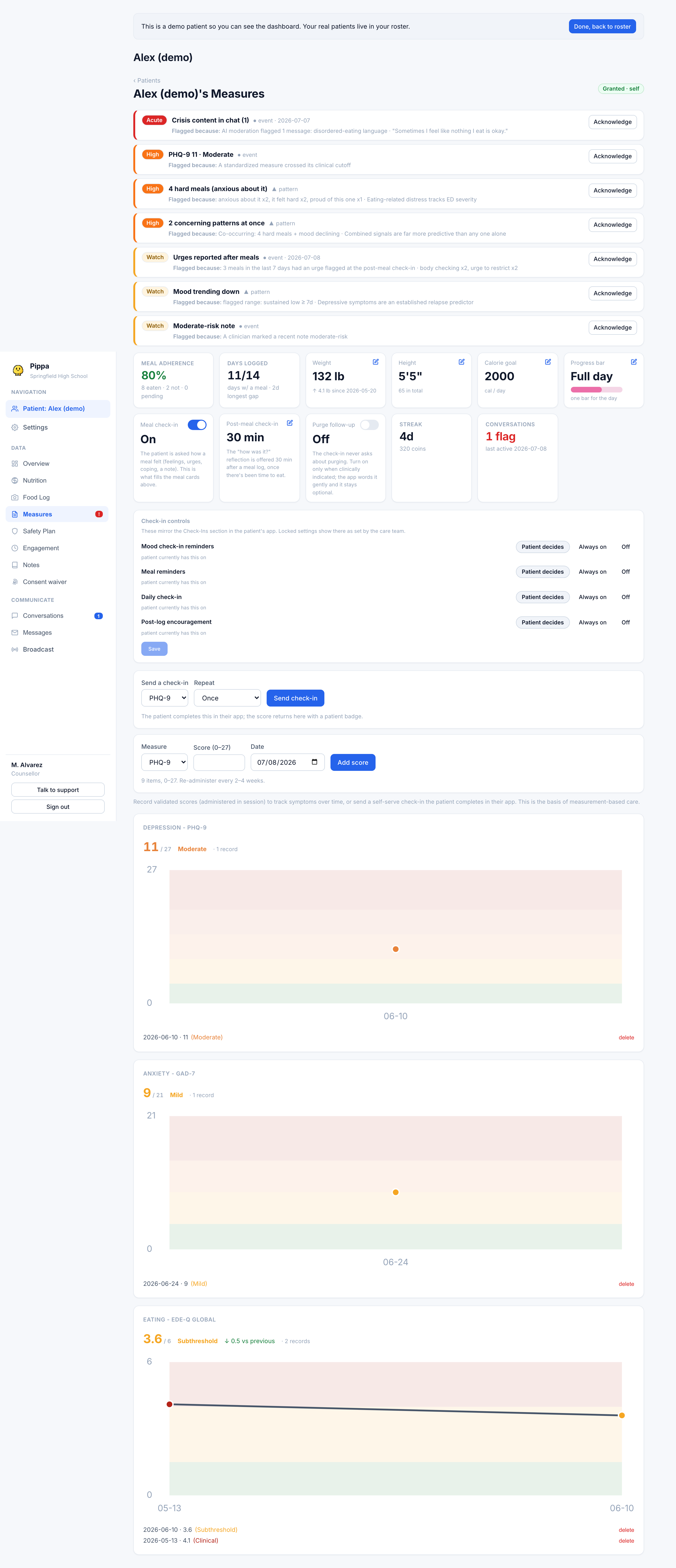
- EDE-Q: when a patient self-submits, the four subscales (restraint, eating concern, shape concern, weight concern) are broken out under the record, so you can see whether shape and weight concern are driving a high global mean.
- Action bands feed triage: a score in an action band feeds the patient's concern list on the overview and the at-risk column on the roster, so you do not have to remember to check.
A C-SSRS of 4 or higher (intent, plan, or behavior) is a positive screen and emails every clinician with consent for that patient. Pair it with the patient's safety plan and follow the crisis alert playbook.
Closing the loop
A number is only useful if it changes something. When a measure moves, name it with the patient, adjust the plan, and record what you did on the Notes tab. Over weeks, the trend chart becomes a shared story of progress you can show the patient.
For research-backed review priorities beyond engagement and scores, see What the dashboard can miss.